
Gee’s Bend is the traditional name of Boykin, a rural community in Wilcox, Alabama. The federal government named it Boykin in 1949 when a post office opened there, but the locals still call it Gee’s Bend. This surprised me, because the name Gee’s Bend comes from two facts: 1. The community is located on a horseshoe-shaped bend of the Alabama River, and 2. Joseph Gee established it as a plantation in 1816, for which many enslaved people were brought in to grow and process cotton. Their descendants are the ones who live there to this day.
The closest town to Gee’s Bend is Camden, AL, which itself is a small town of less than 2,000 residents. Gee’s Bend can be accessed from Camden by car, but even today it’s faster to get there by ferry. This has contributed to Gee’s Bend’s continued isolation and its lack of amenities.
However, Gee’s Bend has a grand thing going for it – the history of dedicated Black women who, nearly 200 years ago, started making quilts, first as necessities and today as art. I learned about Gee’s Bend recently in the pages of Terah Shelton Harris’s book Where the Wildflowers Grow. I’ll tell you about the book later, but for now, I’ll say that it made me curious enough to go see it for myself.
Visiting Gee’s Bend
The Gee’s Bend Ferry is minutes away from the center of Camden. If you ever go, make sure to cross the river on it at least once. The ferry is big enough for about 15 cars, and it comes in and out at very specific hours. The earlier you go, the more options you’ll have for your return. The internet says the ride costs $3, but we were asked for $4. It takes 15 to 20 minutes to get to the other side, and it’s a very picturesque ride.
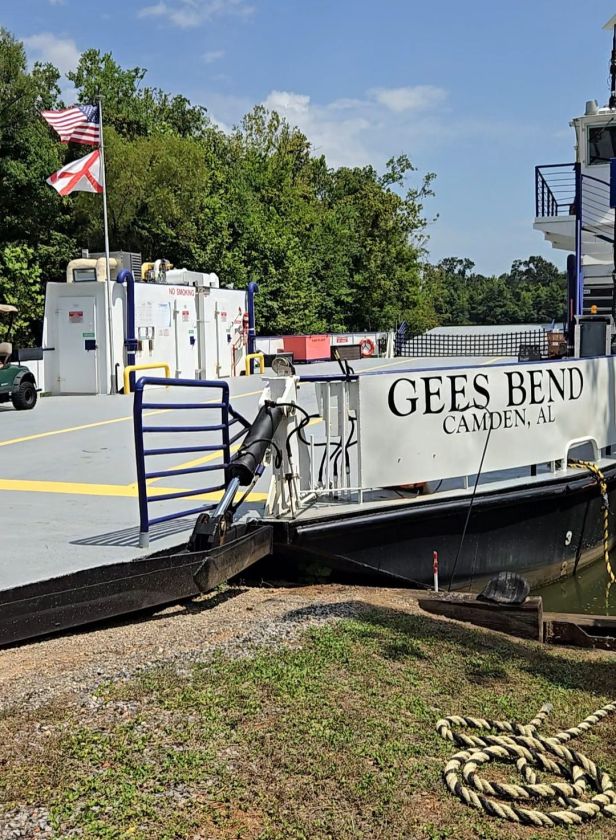
Immediately next to the ferry station at Gee’s Bend is one of the quilt stores, but know that there are several more to visit further inland. In fact, there’s a self-guided quilt trail that helps you drive from one quilter to the next. There’s also a welcoming center and a Freedom Quilting Bee museum and gift shop.
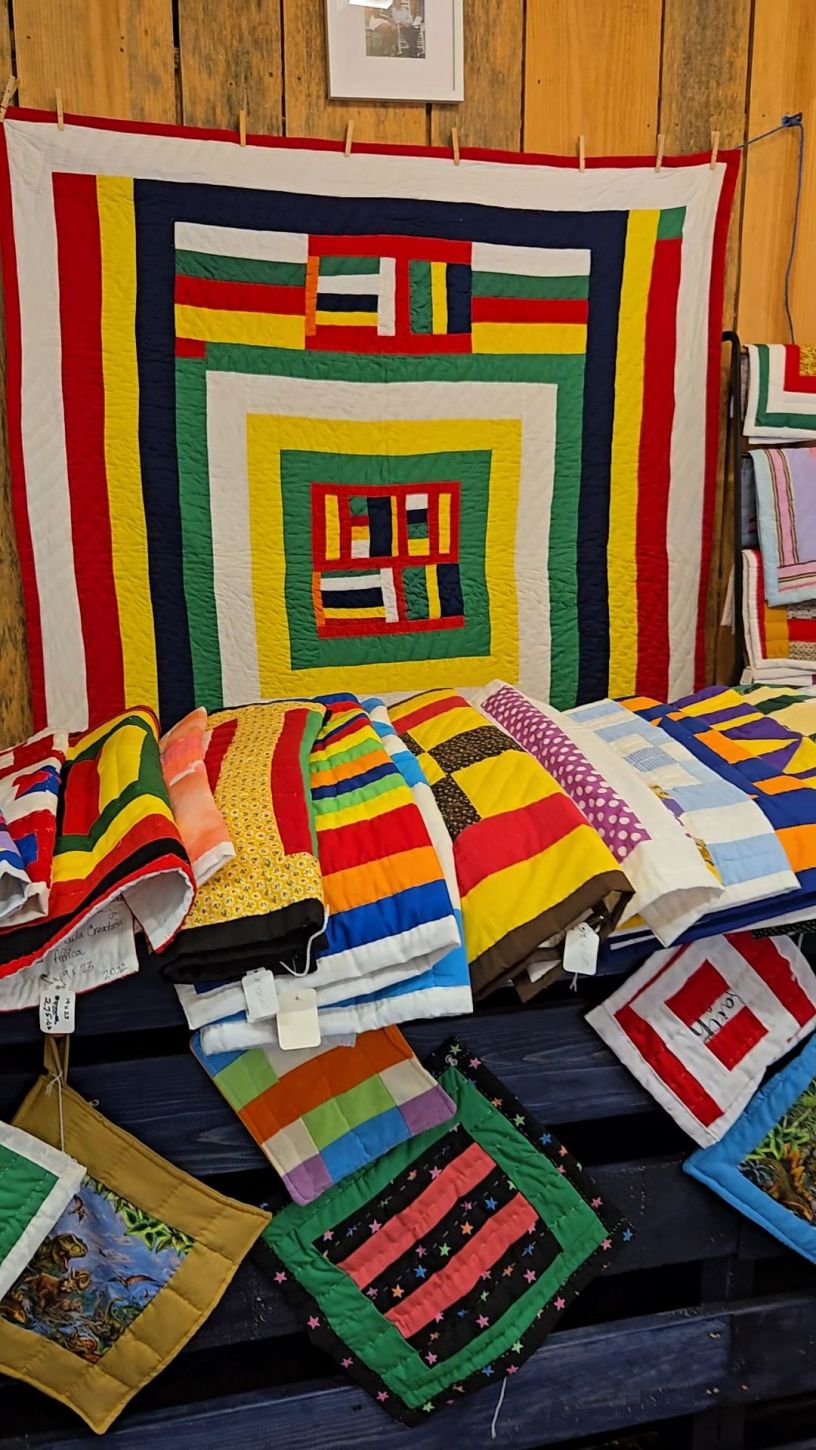
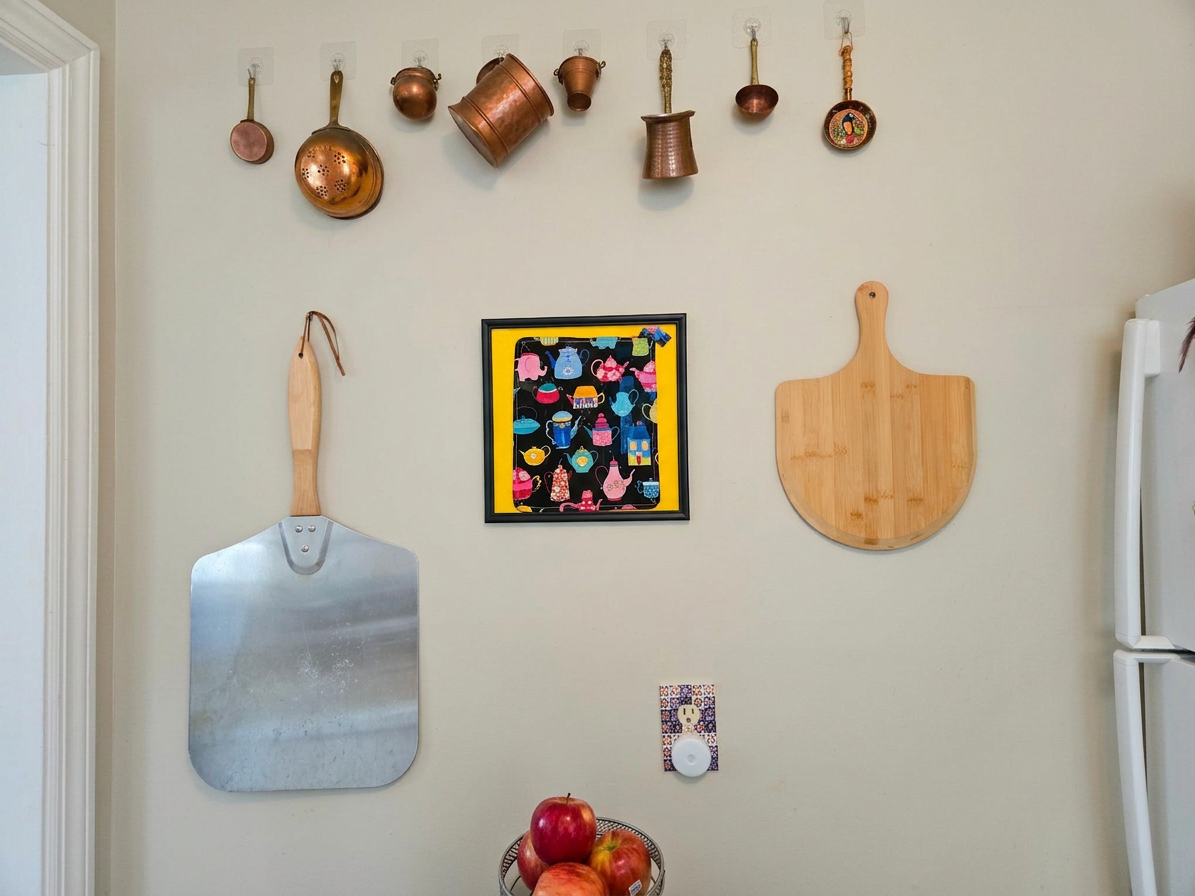
The quilts are colorful and beautiful, and, to be honest, expensive. They deserve to be expensive, though, as they take a lot of labor. Miss Emma Mooney Pettway told me that it takes her about a month to complete one of the large quilts. I found her sitting at her sewing machine at the first store near the ferry. She was gracious and inviting and told me about the history of her family and how the early quilts were made to keep the draft out in the colder months. I told her about my own grandma, who in Costa Rica used to make quilts out of old pieces of fabric and would sell them in the countryside for extra income. We bonded over our stories. Although I couldn’t afford a large piece, I did come home with one of her small quilts, and it’s now hanging in my kitchen.
The Freedom Quilting Bee museum is a recommended stop where you can learn about the history of the Bee, which, by the way, means something like a cooperative, like a group of bees that come together to create something awesome. The ladies of Gee’s Bend did just that. If you plan ahead of time, you could even join one of the quilting workshops. There was one in progress when I visited. They also have T-shirts, bags, quilts, and other knick-knacks for sale. I bought the cutest box of Gee’s Bend Quilt Notecards that you can also buy through the Metropolitan Museum of Art.
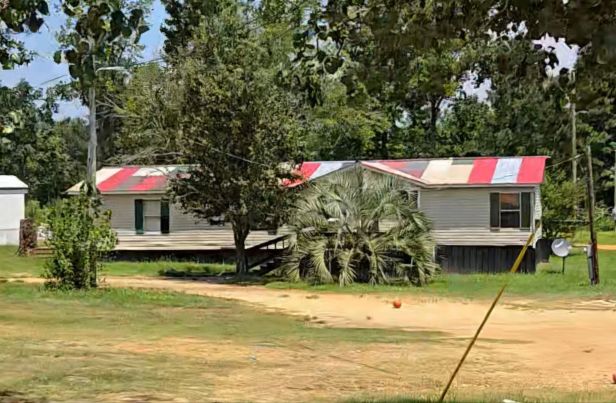
Look carefully as you drive into Alberta, AL, on your way out of Gee’s Bend. You will see houses with roofs and fences that look like quilts and other adornments that honor the history of the area.
Other fun things related to Gee’s Bend
Airing of the Quilts Festival
On the first Saturday in October, the community celebrates its quilting tradition with displays, sales, workshops, guided tours, exhibitions, and food. This year it falls on October 3, 2026. Learn more about it here.
Ralph Lauren collaboration
Check out this page to see the collab between Ralph Lauren and Gee’s Bend artists. They offer top-priced jackets, quilts, even dishes.
Stamps
In 2006, the United States Post Office released 39-cent stamps commemorating the quilts of Gee’s Bend. They were a limited release and can no longer be purchased for use, but they are available from collectors and websites like eBay.
The book
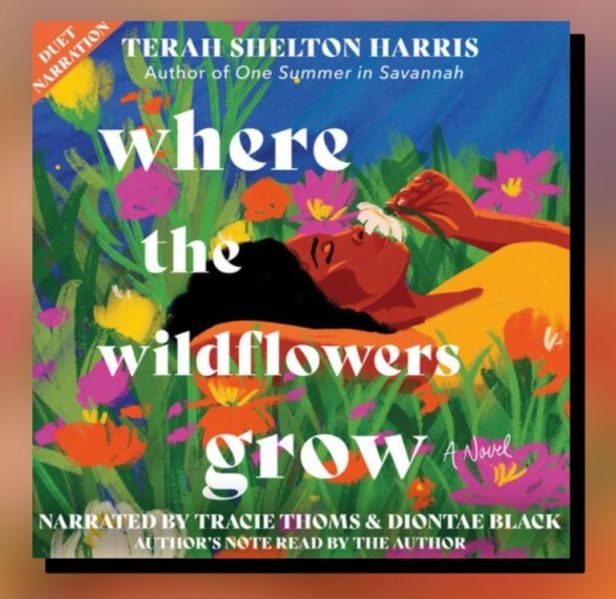
Terah Shelton Harris’s book Where the Wildflowers Grow got me interested in this area and its beautiful quilts. The story, in my opinion, is 3.5 out of 5. It has an imaginative premise, but the writing is a bit repetitive. The main male character is preachy and annoyed me to death. But the book does a great deal for Gee’s Bend and Camden, and it will make you want to visit.
My grandma Vitalia
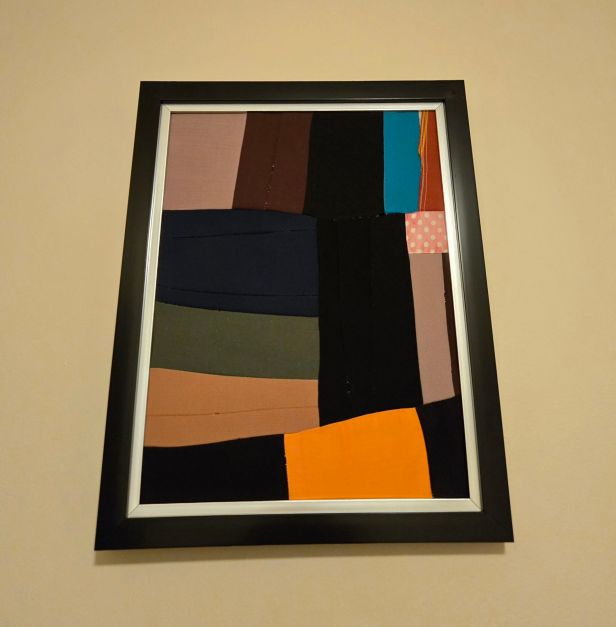
Two weeks ago, I received this frame from my family in Costa Rica. It’s a piece of the last quilt made by my grandma in the mid-1900s, which has now been divided into five pieces and adorns the houses of my dad and aunt, my two siblings, and me. Like the original Gee’s Bend quilts, it was made for practical uses: to keep us warm and to sell for extra money. And like today’s Gee’s Bend quilts, her last one is now, at least for my family, art. This article wouldn’t be complete without mentioning her.
Videos
- On the way on Gee’s Bend – the ferry
2. The quilt trail

